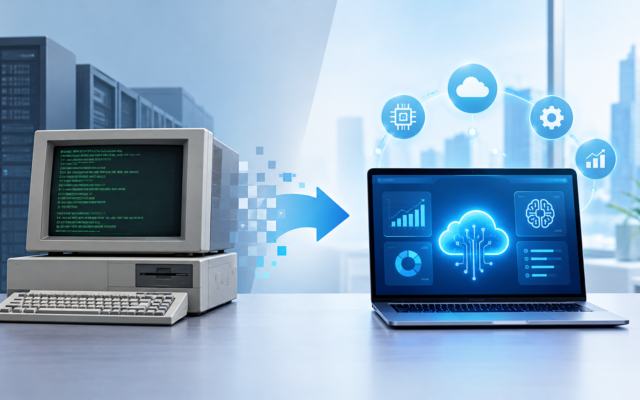
I used to think digital transformation meant replacing old computers, moving files to the cloud, or giving employees a new software tool.
Then I worked on projects where a company had plenty of technology but still operated almost exactly the same way it did years earlier.
They had cloud storage. They had business software. They had websites, mobile apps, dashboards, and automation tools.
Yet employees were still copying information from one spreadsheet into another, customers were waiting for manual approvals, and managers were making decisions using reports that were already outdated.
That experience changed how I look at digital transformation.
It isn’t really about buying more technology. It’s about changing how a business works.
In 2026, companies are taking that idea further. Artificial intelligence, cloud platforms, automation, data analytics, cybersecurity, digital payments, and connected customer experiences are becoming part of how businesses design products and make decisions.
For some companies, this means improving an existing business model.
For others, it means creating an entirely new way of making money.
What Digital Transformation Actually Means
Digital transformation is the process of using digital technology to significantly improve how a business operates, serves customers, and creates value.
That can include relatively simple changes.
A company might replace paper invoices with digital invoicing.
A retailer might move from a physical-only sales model to an online store.
A customer-service department might introduce AI-assisted support.
A manufacturer might use sensors to monitor equipment.
A financial company might allow customers to complete an application entirely online.
The technology is different in each case, but the underlying goal is similar:
Make the business more efficient, responsive, scalable, or useful.
This is why simply installing software isn’t enough.
If an old manual process is transferred into a new application without redesigning the process, the company may end up with an expensive digital version of the same problem.
Why 2026 Is Different
Digital transformation has been happening for years, but several technologies are now mature enough to influence everyday business operations more directly.
The biggest areas include:
- Artificial intelligence
- Cloud computing
- Automation
- Data analytics
- Digital payments
- E-commerce
- Cybersecurity
- Remote and hybrid collaboration
- Internet-connected devices
- Low-code and no-code platforms
The biggest change I’ve noticed is that technology is increasingly becoming part of the business model itself, rather than simply supporting the business.
A company might previously have sold a physical product and used software to manage inventory.
Today, it might sell the product, provide a connected mobile app, collect usage data, offer subscriptions, and use AI to personalize the customer experience.
That’s a much bigger transformation.
AI Is Changing More Than Customer Support
Artificial intelligence is probably the technology getting the most attention in 2026.
But businesses are discovering that AI isn’t only useful for chatbots.
Companies are using AI-assisted tools for tasks such as:
- Writing and editing
- Data analysis
- Customer support
- Document processing
- Software development
- Marketing research
- Forecasting
- Fraud detection
- Product recommendations
- Internal knowledge search
For example, imagine an insurance company receiving thousands of documents every day.
Previously, employees might manually read and categorize those documents.
AI-powered document processing can help identify information, classify files, extract important fields, and send the results into another business system.
The employee still needs to review important decisions, but much of the repetitive work can be reduced.
That’s a very different use of AI from simply putting a chatbot on a website.
Companies Are Moving From Software to AI-Assisted Workflows
One trend worth watching is the move from individual AI tools toward AI integrated into existing workflows.
Think about an employee processing a customer request.
Instead of opening five applications, searching for information manually, writing a response, and updating a database, a modern workflow could connect these steps.
The system might:
- Receive the customer’s request.
- Identify the issue.
- Find relevant customer information.
- Search internal documentation.
- Prepare a suggested response.
- Update the appropriate record.
- Escalate unusual cases to a human.
The employee isn’t necessarily replaced.
Instead, the employee spends less time moving information between systems.
This distinction matters because successful transformation often comes from redesigning the workflow, not simply reducing headcount.
Cloud Computing Is Becoming the Foundation
Cloud technology is another major part of modern business infrastructure.
Instead of maintaining every server and application inside an office, companies can use cloud platforms to access computing, storage, databases, security services, analytics, and other infrastructure over the internet.
Major platforms such as Amazon Web Services, Microsoft Azure, and Google Cloud provide businesses with tools that can scale according to their needs.
For a startup, this can be particularly useful.
A small company doesn’t necessarily need to purchase a large amount of physical infrastructure before launching a product.
It can begin with relatively modest resources and increase capacity as demand grows.
However, there’s a lesson here that I learned the hard way with online projects:
Cloud doesn’t automatically mean cheap.
Unused servers, storage, databases, monitoring services, and subscriptions can quietly increase costs.
A digital transformation strategy should therefore include cost monitoring from the beginning.
Business Models Are Becoming More Subscription-Based
Digital transformation has also changed how companies charge customers.
Instead of selling something once, businesses increasingly offer recurring services.
Examples include:
- Software subscriptions
- Streaming services
- Cloud storage
- Online education
- Digital memberships
- Business analytics platforms
- Productivity tools
- Connected devices with premium services
The subscription model can provide recurring revenue, but it also changes what customers expect.
If customers pay every month, they expect continuous improvements.
A company can’t simply launch a product and stop developing it.
It needs to keep improving:
- Features
- Reliability
- Customer support
- Security
- Performance
- User experience
That creates a completely different relationship between a company and its customers.
Traditional Businesses Are Going Digital Too
Digital transformation isn’t limited to technology companies.
A local restaurant can use online ordering and digital payments.
A manufacturing company can introduce predictive maintenance.
A medical organization can offer digital appointment systems.
A construction company can use project-management software.
A retailer can combine physical stores with e-commerce.
A logistics company can use real-time tracking.
A small professional-services company can automate appointment scheduling, invoicing, and customer communication.
This is one of the most interesting parts of digital transformation.
You don’t have to be a software company to operate like a digitally enabled business.
Data Is Becoming a Core Business Asset
Companies generate enormous amounts of information.
For example:
- Customer purchases
- Website visits
- Search behavior
- Product returns
- Support requests
- Inventory levels
- Employee activity
- Marketing performance
- Equipment data
The challenge isn’t simply collecting this information.
It’s making it useful.
A company might discover that customers who purchase one product frequently purchase another.
A retailer might notice that certain products sell better at specific times.
A software company might identify where users stop using an application.
A manufacturer might identify equipment patterns that appear before failures.
These insights can influence actual business decisions.
But poor-quality data creates poor results.
One of the biggest mistakes companies make is assuming that a sophisticated analytics dashboard automatically produces good decisions.
It doesn’t.
The underlying data must be accurate, relevant, secure, and properly interpreted.
Customer Experience Is Being Redesigned
Customers increasingly expect businesses to work across multiple channels.
Someone might discover a product on social media, visit the company’s website, ask a question through chat, purchase through a mobile device, and later contact support.
If those systems don’t communicate with each other, the experience can become frustrating.
Digital transformation can connect these touchpoints.
For example:
Social media → Website → E-commerce → Payment → Delivery → Support
Instead of treating each stage as a separate department, companies can build a connected customer journey.
This can make a business feel much more responsive.
Automation Is Reducing Repetitive Work
Not every transformation requires AI.
Sometimes traditional automation is enough.
Consider a simple workflow:
A customer fills out a form.
Previously:
- Employee checks email.
- Copies the information.
- Updates a spreadsheet.
- Sends confirmation.
- Creates a task.
- Notifies another employee.
With automation:
- Form submission triggers the workflow.
- Customer receives confirmation automatically.
- Information enters the CRM.
- A task is created.
- The relevant employee receives a notification.
Tools such as Zapier, Microsoft Power Automate, Make, and similar workflow platforms can connect different applications without requiring a large custom software project.
For small businesses, this can be one of the easiest ways to start improving operations.
Cybersecurity Has Become Part of Transformation
There is an uncomfortable side to digital transformation.
The more systems a business connects, the more important security becomes.
A company moving customer records, payments, employee accounts, and internal documents online needs to consider:
- Strong passwords
- Multi-factor authentication
- Access controls
- Regular backups
- Software updates
- Employee training
- Data encryption
- Monitoring
- Incident-response planning
One of the worst approaches is treating cybersecurity as something to add after the digital project is finished.
Security should be included from the beginning.
A beautifully designed digital platform isn’t very useful if a security incident destroys customer trust.
The Biggest Mistake: Buying Technology Before Solving the Problem
I’ve seen businesses get excited about new technology and immediately start shopping for software.
That’s usually backwards.
Start with the problem.
For example:
Problem: Employees spend three hours every day manually preparing reports.
Then ask:
Why does this happen?
Maybe information is stored across several systems.
Now investigate whether those systems can be connected.
Only then should you choose the technology.
This approach avoids spending money on tools that don’t solve the underlying issue.
A Practical Digital Transformation Process
If I were helping a small or medium-sized business start a transformation project, I’d keep the first phase relatively simple.
Step 1: Map the Current Process
Choose one important workflow.
Document every step.
Don’t assume you know how it works.
Actually watch employees perform it.
You may discover unnecessary steps that management wasn’t aware of.
Step 2: Identify the Biggest Bottleneck
Look for the task causing the most:
- Delays
- Errors
- Cost
- Customer frustration
- Repetitive work
Start there.
Step 3: Check Existing Tools
Before buying another application, see whether your existing software already has the required feature.
Businesses sometimes pay for three tools that could have been replaced by one properly configured system.
Step 4: Automate Carefully
Automate repetitive tasks first.
Don’t automate complicated decisions before understanding the risks.
Step 5: Test With a Small Group
Don’t immediately transform the entire company.
Test the new workflow with a small team.
Measure what happens.
Step 6: Measure the Result
Choose specific metrics.
For example:
- Processing time
- Cost per transaction
- Customer response time
- Error rate
- Employee hours saved
- Conversion rate
If you can’t measure whether the change helped, it becomes difficult to justify expanding it.
Common Digital Transformation Mistakes
Trying to Change Everything at Once
Large transformation programs can become difficult to manage.
A smaller project with measurable results can provide useful lessons before the next stage.
Ignoring Employees
Employees are the people who actually use the new systems.
If they don’t understand why a tool is being introduced or how it improves their work, adoption can suffer.
Training and feedback matter.
Choosing Technology Because It’s Popular
A famous platform isn’t automatically the right solution.
The best technology depends on the company’s actual requirements.
Forgetting Existing Customers
Businesses sometimes redesign internal systems while overlooking the customer experience.
Digital transformation should ultimately improve how the organization creates and delivers value.
Ignoring Data Quality
Garbage data can produce misleading reports and unreliable AI outputs.
Before building sophisticated systems, make sure the basic information is accurate.
What Small Businesses Can Do in 2026
You don’t need a huge technology budget to start.
A small business could begin with five practical improvements:
1. Move important documents to organized cloud storage.
2. Introduce digital invoicing and payments.
3. Automate repetitive administrative tasks.
4. Use analytics to understand customer behavior.
5. Introduce AI carefully for appropriate repetitive tasks.
Even something as simple as automatically organizing leads from a website form can save hours over a year.
The goal isn’t to have the most technology.
The goal is to remove unnecessary friction.
What Digital Transformation Could Look Like Next
The next stage of transformation is likely to involve increasingly connected systems.
Instead of employees switching between isolated applications, businesses may increasingly use integrated platforms where data, automation, analytics, and AI work together.
A sales system could understand customer activity.
A support system could access relevant account information.
An inventory system could respond to changing demand.
Management dashboards could provide near-real-time information.
AI assistants could help employees search internal knowledge and prepare routine work.
But human oversight will remain important, particularly when decisions involve money, customers, employment, security, or sensitive information.
Technology can process information quickly.
That doesn’t automatically mean it understands the broader consequences of every decision.
Final Thoughts
Digital transformation in 2026 isn’t simply a race to adopt the newest technology.
The companies making meaningful changes are looking at something more fundamental:
How should this business work now that digital technology is available?
That question can lead to better workflows, new products, subscription models, automated processes, connected customer experiences, and completely different ways of delivering value.
If you’re running a business, you don’t need to transform everything tomorrow.
Start with one frustrating process.
Understand why it exists.
Remove unnecessary steps.
Connect the systems that need to communicate.
Automate what makes sense.
Measure the result.
Then improve the next process.
That’s a much more practical approach than buying a collection of trendy tools and hoping they somehow transform the business.
The technology will continue changing quickly. The companies that understand their customers, processes, data, and economics will be in a much better position to decide which technologies are actually worth adopting.